A WELCOME FOR THE CURIOUS
Do I Need to Be Religious to Visit Pinecourt?
No. You are welcome to visit Pinecourt whether you follow a religion, are exploring one, or simply enjoy quiet places. Walk through the halls, read about their imagery and ask the guides a question. You decide whether to join a virtual gesture of respect or just observe.
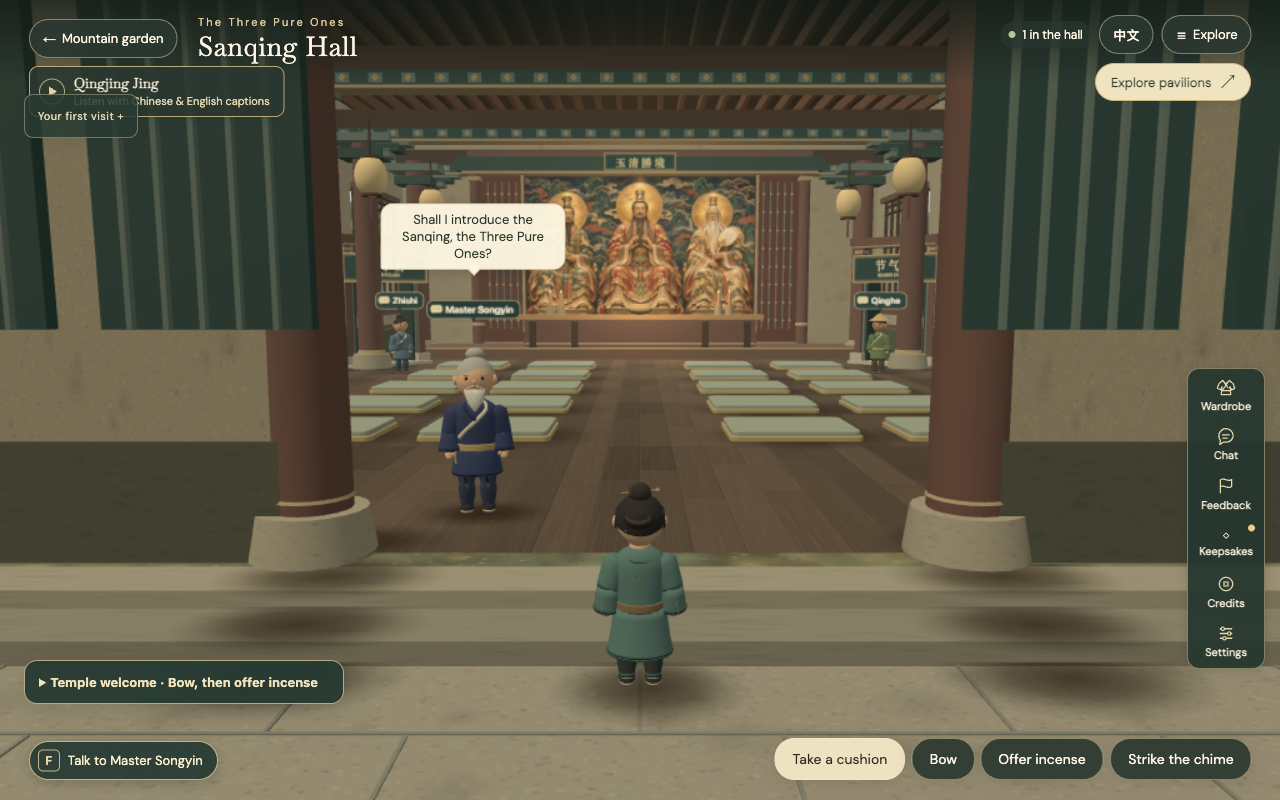
What kind of place is Pinecourt?
Pinecourt is an independent virtual courtyard inspired by Chinese Daoist culture. Its garden, characters and activities bring together creative scenes and cultural introductions. You are visiting a digital interpretation, with opportunities to follow sources and learn more about the traditions behind it.
Daoism, also spelled Taoism, includes religious communities, texts, rituals and philosophical inquiry. Dao is often translated as “the Way.” Different schools and communities have developed different practices; one courtyard cannot represent all of them.
Cultural references: The Metropolitan Museum of Art · Daoism and Daoist Art
Why does the welcome mention bows and incense?
Pinecourt’s welcome offers a simple sequence: three bows, then incense. Here, the gestures invite you to acknowledge the shrine and give your visit a moment of attention. They are optional. Closing the welcome tip lets you continue exploring, and choosing to observe will not block the room’s activities.
This sequence is Pinecourt’s own introduction, inspired by Chinese temple traditions. It is not a claim that every Daoist temple follows one identical rule. If you later visit a physical temple, follow that temple’s signs and the guidance of its staff.
- If you wish to participate, face the shrine and select “Bow” three times. Let each bow finish before selecting it again.
- Select “Offer incense” for the virtual incense gesture.
- Continue to the desk or talk with the room’s guide whenever you are ready.
Who are the figures in Sanqing Hall?
Sanqing means “the Three Pure Ones,” also translated as “the Three Purities.” These are major deities in Daoism. Pinecourt’s main hall introduces their names and images so you can begin with something visible: a robe, a headdress, or the way a figure holds its hands.
Ask Master Songyin to introduce the hall. You can take your time with one detail instead of trying to remember every name on your first visit. The museum reference below offers a wider introduction to Daoist art when you want more context.
Cultural references: The Metropolitan Museum of Art · Daoism and Daoist Art
How can I take part respectfully?
Curiosity is a good starting point. Read the names attached to the images, ask what an unfamiliar term means, and leave room for people who understand the tradition differently from you. If you chat with another visitor, invite their perspective without expecting them to speak for an entire culture.
You do not have to perform belief. A quiet look at a painting, a question about a verse, or a moment listening to the courtyard bell can be your whole visit. You are also welcome to stay longer and return another day.
What can I do without paying?
The garden, bell, bamboo lot activity and prepared cultural introductions are free. You do not need an account for this first visit. The room guides have written answers you can explore for free in English or Chinese.
Personal AI replies are an optional credit feature. Their cost is shown before you send a request. You can always continue with the free material or simply return to the garden.
Sources & further reading
These references provide cultural context. Pinecourt’s virtual activities are described separately in the guide.
Take a moment in the courtyard
Visit Sanqing Hall
The bell, bamboo lots and garden are free. AI conversations use credits.
Visit Sanqing Hall